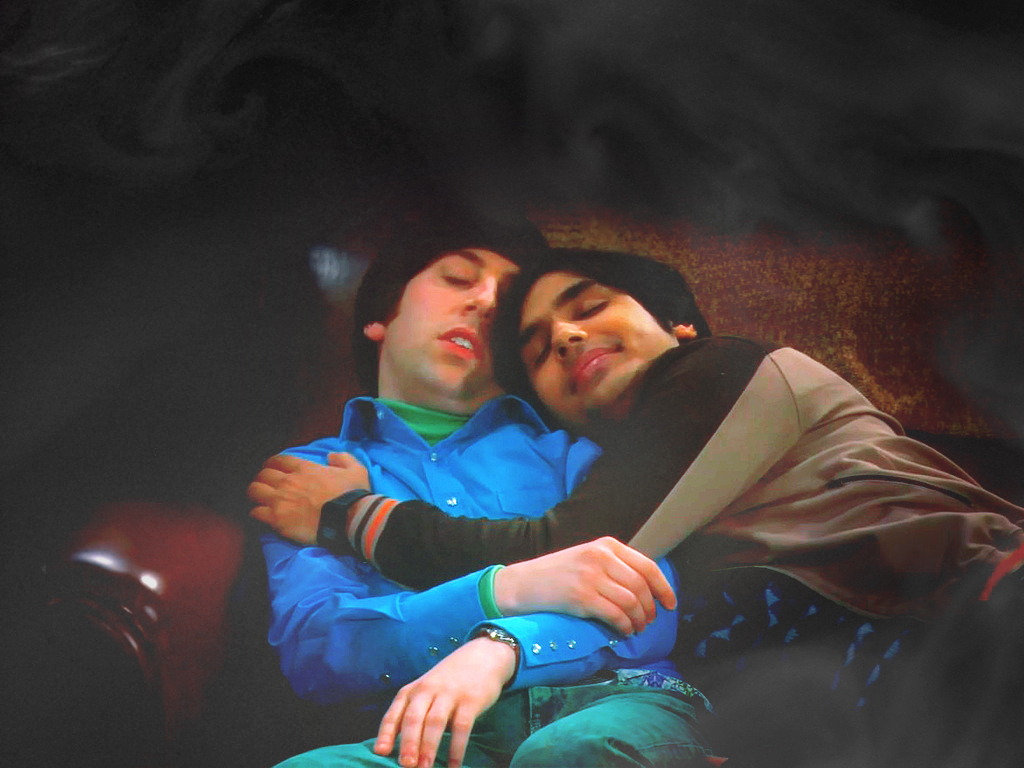
Monday, February 21, 2011

Things I Like #4: Coffee With Friends

In the small rural town in which I grew up, there was no coffee shop, no cafe or bistro where friends gathered to talk among themselves. For that simple pleasure, there was the kitchen, mostly the gathering place of women to talk about recipes, husbands, the weather and, I'm sure, many other subjects--both sanctioned and taboo--to which I, as an innocent child, was not privy.

The men congregated in the shed. Some chewed baccy or smoked Rothmans cigarettes, blowing smoke rings into the air as if exhaling a ghost. They'd talk of the "queer" ones in the community--meaning anyone who was a bit different--or about fishing and hunting, about what a nag the wife was or whatever topic happened to present itself for the day. Likewise, the woods, the fishing stage, a chance meeting on the side of the road, or two cars parked side by side on the road itself and blocking traffic--the need for talk, the desire for connection, of sharing the news somehow found expression.

It was a rough life, with a rough-hewn communication. The worlds of men and women rarely intertwined. At house parties--either at Christmastime or in summer when the American relatives would come visit--the men would end up in the living room and the women in the kitchen, chattering and drinking whiskey and beer. The children might cling to the feet of a parent or find himself (as I often did) sitting in the stairwell, ears pricked for the good parts--the juicy jokes, the curious gossip, or the unexpected song (which mostly came in the form of an Irish folk song or a country song from the radio).

My friends and I would build treehouses or forts--even in winter, it was humongous snow fortresses that would have housed Napoleon's army from the cold--and it was there we would talk about whatever was on our minds. Superman. Batman. Wolverine. Girls we liked or didn't like. How many stars were in the sky. Whether there was life in outer space. How far it was to California, how much it might cost to get there and whether you would ever go? When I didn't feel like talking to people, I would slink into the front seat of my parents' car with a good library book (my parents' budget didn't justify buying books, even if we'd had a bookstore) and stay there for hours, reading. Daydreaming. Or I'd spend my time on the landwash, calling out snails from their shells while the North Atlantic rushed and crashed onto rocks all around.

When I moved away to the city in my late teens, I discovered that, while I enjoyed being alone sometimes, my favorite passion was conversation. I'm sure it exasperated many of my friends, but there was nothing I enjoyed more than to sit and talk--didn't matter about what. It could be about plans for the future, about the merits of having a TV or not having one, about how the world might look in twenty years (boy, were we wrong), about whether Communism was a legitimate style of government, whether the Russians might really bomb us, or whether we would ever find true happiness, married with children, unmarried without children, or single and gallivanting about the world, largely dependent on the kindness of strangers as we backpacked across Europe, sleeping in the barn with the farmer's daughter, carrying a guitar on our backs, and doing odd jobs to keep ourselves alive.

It was the kind of talk that occurred in our bachelor apartment, shared by as many as five of us at a time and sometimes as few as two. It would take place in coffee shops--back then, Tim Horton's was the venue of choice, as St. John's didn't have nearly as many cafes as it does now. I can remember sitting under the overpass on Kenmount Road late at night, talking to a friend of mine about the state of the world while another friend "needed the apartment" with her boyfriend for two or three hours. I sometimes wonder how life has treated that friend--because we had a connection. There was a truth, an honesty and an urgency to our talk. The friend who needed the apartment eventually married that boyfriend. But I doubt they just talked, not that night.

I remember sitting on a picnic bench with a friend who owned a guitar. We sang Simon and Garfunkel songs over and over, dreaming of being them one sunny day, and we even played music together in years to come, on stage and off. But it was the talking, the daydreaming in between that was the glue that ensured we would remain together as friends for years, even decades, to come.

These days, my tolerance for long conversations that last into the night has faded and gone. I'd always had an appetite for hours and hours of discussion--in grassy fields, open-windowed cars, sitting around bars, barbecues or kitchen tables--until everyone else was ready to get some shut-eye except me. Always the last man standing. Always wanting to call for pizza at 3 a.m. or go out for a Tim's run at 4:30 or race to Signal Hill to watch the sun come up over the blazing red ocean. Sleepy-headed and chilled to the bone sometimes, but it was as good as life gets, especially when you're young.

I've discovered in recent years that I still enjoy it. Sure, besides my writing, I make a living by talking. I discovered a couple of years ago when I'd had minor throat surgery that I still love talking and will always love it. I'll never take it for granted again.

Most of my friends are female. And most of them are talkers. I admit I'm less of a talker than a listener. I'll ask questions, like a reporter or David Letterman, anything to keep you from being silent. I think there's something I've always felt, a sadness or a fear, a sense of mortality--the realization, even when I was young and listening through the stair railings--that the discussion doesn't go on forever, and, as Leonard Cohen says, "It's hell to pay when the fiddler stops."

I don't like going to bed early. I don't like ending conversations until every last syllable and emotion is wrung from it like water from a dishcloth or red wine from a glass. I don't like when friends have to get on planes or when students have to leave for the end of semester. Final exams are a morbid thing. Feeding the meter is an abomination--a pause in a perfectly good spoken-aloud thought. The ringing of the cellphone. The vibration of an incoming text message. The dry white bottom of a finite cup of coffee. These have always been, to me, the near equivalent of the closing of a lid on a coffin.

There'll be time enough for silence between friends when the fiddler stops for good.

I'm thinking about all this now because I just came back from a long--though not nearly long enough--coffee and conversation with a very dear, old friend (sixteen years now). It was snowy and all the cozier for it, with a view of the harbour, the ships coming in and going out, surrounded by people having coffee and breakfast with their own friends, acquaintances, and possibly family.

Afterwards, stepping out into the cold, I felt (as I always do at such times) as if I've been awakened from a powerful and perfect dream--the kind where friends always have time for coffee and conversation, for sharing intimate secrets and opinions about politics, religion, TV and music. I'm even interested in what she has to say about my iPod Touch, simply because she is my friend and when we first met, email was still new and the idea of an iPod hadn't even entered the mass consciousness. Computers were an elite item that would never, ever infiltrate the home.

I treasure conversation threads on Facebook or email. I thrill at the sound of the bell that says, "You've got mail!" But nothing, but nothing replaces good old coffee talk, which is far more addictive than email or Facebook could ever be. I'm already missing that friend and already planning the next coffee with another friend whom I haven't seen in a while. And on it goes; around it whirls.

However, it's not the talking I crave. It's the sound of that voice on that day--the voice that some day will not be there anymore, but for now has the ability to hold me rapt.

http://www.youtube.com/watch?v=ETQfuzNGT58

Tuesday, January 25, 2011

Things I like #3: The Big Bang Theory

Penny is a hot blonde who moves into the apartment next door to Leonard and Sheldon, self-described (and actual) nerds who, along with their two friends, Raj and Howard, live a sheltered existence, working in a laboratory by day and, at night, indulging in comic books, Facebook, Star Trek marathons, anything related to Star Wars (Sheldon will only watch the movies sequentially because he prefers “to be disappointed in the order in which George Lucas intended.”), Green Lantern, Incredible Hulk, The Fantastic Four, and space travel. That’s only the beginning of the seemingly infinite list of quirks and predilections that come with being these characters.


It’s not just that they’re geeks. Sure, we laugh at them. But we also laugh with them. When Penny, the cheesecake factory waitress, gets a good one on Sheldon, we cheer. Not just because she’s hot (I guess I probably mentioned that detail already), but because Sheldon is a snob of the highest order and thinks he is vastly superior to Penny. In many ways, maybe he is superior to her…although none come to mind. We like the underdog, and Penny is it—in spite of how she looks and that she’s vastly likable. Huh.

Speaking of the underdog, Leonard is a short, bespectacled, rather awkward man-boy who pines to be with Penny and, guess what? (SPOILER ALERT) He gets his wish, becoming, to her, "my little humunculus." That’s another thing I love about this show—the world seemingly loves an underdog—someone who seems at a disadvantage in a certain arena—whether socially, intellectually, athletically, or whatever. I love an underdog and, when it comes to dating beautiful women, Leonard is the ultimate underdog, and yet he gets Penny.

See full size imageI could talk about Raj’s constant stereotyping of Indian culture even while he berates others for being “racist.” Or I could mention Howard’s penchant for irritating “the ladies”—as well as his friends—with his constant bravado regarding his sexual exploits, his Furleyesque outfits, his outrageously funny mother with whom he lives, or his various masturbatory fantasies—before he, too, inexplicably finds hismelf hooked up with a rather hot, bespectacled blonde named Bernadette.

But mostly it’s Sheldon who keeps me watching. I live for those episodes when his “Creationist” mother comes to visit, played by Laurie Metcalfe. But it’s Sheldon himself who makes it work. He considers himself to be the smartest person in any room, perhaps in any universe, alternate universes included. He cannot tell a lie, and he cannot keep a secret.

Sheldon: I promised Penny.


Leonard: Promised Penny what?


Sheldon: I wouldn't tell you the secret. (pause) Shhhhh!!!!


Leonard: What secret? Tell me the secret.


Sheldon: Mom smokes in the car. Jesus is okay with it, but we can't tell dad.


Leonard: Not that secret, the other secret.


Sheldon: I'M BATMAN!!!! SHHHH!!!

And when he gets sick, he needs someone—preferably his mother, but the reluctant Penny will do—to sing “Soft Kitty” to him. Penny eventually turns the tables and gets him to sing rounds.


I could go on and on with favorite episodes, favorite moments, but the upshot of it all is that this show makes me laugh. I know that some people consider it an intellectual sin akin to reading a romance novel or an Archie comic to own a TV, let alone watch it. And I know that if you admit to having a TV, you really should not plug it in or—God forbid—get cable. And if, by some stretch of genius, you do all of that and/ or have a satellite dish, then you absolutely must not—couldn’t possibly—be interested in a mere sitcom. You must watch Animal Planet, Discovery, Bravo! , CNN, Newsworld, or something slightly intellectual.

I choose to watch The Big Bang Theory because:

1. It makes me laugh. I need to laugh almost as much as I need water. Laughter has never attempted to drown me, unless I happened to take a gulp before I laugh unexpectedly. But I’ll take my chances.

The Odd Couple Poster2. Sheldon is a unique blend of C3P0, Spock, and Jack Klugman's character in The Odd Couple. He’s insufferable and lovable at the same time. And nobody on TV—or in movies, for that matter—can deliver such difficult lines with such perfect comic timing. And his facial expressions and slapstick abilities are pretty fine too.

3. Kaley Cuoco as Penny. Smart, funny, and sexy without trying (okay, sometimes she does try, but only for laughs because she knows the boys can’t handle it).

4. It’s smart comedy such as I haven’t seen since the days of Mad About You, Cheers, Barney Miller and M*A*S*H. Sure, I like the occasional episode of How I Met Your Mother and I caught the occasional Seinfeld. But…

How I Met Your Mother Poster

5. This show has heart. The characters are likable, even when they’re mean to each other. The meanness doesn’t actually go all that deep; you sense the love they have for each other, but they would never say it aloud. They say it with gifted comic books, an awkward hug, or allowing Sheldon his “special place” on the couch. Of course, as his own mother would say, “He is one of God’s special people.”

The Zazzy Substitution Poster

And, once again, I care not what my love of this show says about me. It’s part of who I am. Sure, I could live without it. But I’d rather not. Thursdays at 8:00 Eastern. Anytime if you own Seasons 1-3 as I do.

Oh, and one more before I go:

Sheldon: Why are you crying?


Penny: Because I'm stupid!


Sheldon: That's no reason to cry. One cries because one is sad. For example, I cry because others are stupid, and that makes me sad.

Me, too, Shelly, me too.

Friday, January 21, 2011

Cover Story

Here's a look at the final version of the cover for my upcoming short story collection, Moonlight Sketches. The beautiful artwork comes from the mind and the pen of St. John's artist Darren Whalen, who was an absolute dream to work with. These stories are connected in that they all take place in the same small town, called Darwin, and I wanted a cover that captured the darker side of smalltown Newfoundland. The collection has a dark sense of humour, of course, and I thought the cover should insinuate a blend of dark and light, while making the association with the title at the same time. Darren's idea was that the moon should be present but not too prominent, and I agreed. It was his vision that, not only should the moon cast a glow upon the streets of this midnight town, but that it should spread light upon the entire page--which keeps the cover from being too dark. After all, you need to be able to see the title and the name of the author, as well as various highlighted areas of Darwin. The task was a difficult one, or so I thought, but Darren pulled it off brilliantly. (For the full wraparound cover, you can scroll further down.) Oh, and the solitary figure ambling down the road in the dead of night? The pièce de résistance.
 
Below is the full cover, including flaps,designed by Darren Whalen. Here, you get the full view of Darwin in all its rich, dark glory. There are landmarks in the sketch that mean a lot to me, as someone who has been writing about Darwin for a lot of years. I look at it and I see the places where certain characters' stories occur. I see Winnie and Francis' house overlooking the bay, the school that Benny and Dave break into and find themselves in a heap of trouble, the streets where a soldier's funeral parade brings an entire town to a standstill, and the community's only bar (Jack's Place) where several characters go for solace and a drink, but often find more. And, of course, there's that ubiquitous moon of many faces, peering down on them all like a benevolent, curious, and yet distant god. The characters often act as if no one is watching, and yet, for as alone as they are in this little cove, off the known path, there is always the sense that their stories are taking place on a larger stage, beneath the same moon as you and me, wherever we are. Somehow, Darren Whalen's artwork captures all of these textures and nuances, and so much more. The cover truly is a work of art.
(Click on the cover for a larger view.)

Thursday, January 20, 2011

Things I Like #2: The World According to Garp

The World According To Garp (1978), by John Irving, is not the favorite novel of anyone I know. But it is mine. (Disclaimer: I can’t actually limit myself to one “favorite novel” any more than I can limit myself to one favorite food. But, for the sake of choosing something I actually like about which I can talk, I choose this one.) Unlike most people, I read the book long before I saw the movie starring Robin Williams and Glenn Close.

It was a book about writers. T.S. Garp was an aspiring novelist and his mother, Jenny Fields, was a nurse who didn’t aspire to be one but became one anyway. In fact, her accidental career as a scribe far outpaced and outweighed that of her son, providing much of the humour and pathos in the novel.

There was the cast of characters—including a former football pro who becomes a transgendered houseguest and endearing friend, a professorial wife with a biting wit and a younger lover, a babysitting lover of Garp’s who bites off more than she should chew, a deranged girl from Garp’s childhood who haunts him all his life. There are tons of reasons I love this novel, despite the fact that most times I find John Irving’s ideas about literature insufferable. But he does write good stories. Sometimes they’re way over the top and ridiculously absurd, but they’re always funny and his characters are mostly endearing, despite their flaws.

I love that Garp goes running, as well as being a writer. I love that he chases down a speeding driver who endangers his children. I love that the characters are able to forgive each other almost anything, but even when they don’t forgive—or forgive easily—their reasons are completely understandable. I love the “Undertoad” and the tragedy it brings. I love the scene where he loses a chunk of his dignity in the driveway.

But most of all, I like the inimitable way that Irving’s story—like many of his novels—makes me smile, from beginning to end. Many of my favorite novels (more on those another time, I’m sure) are intellectual experiences, books that make me think, that cause me to see the world in a different way, that mess with ideas of linearity in time and narration. Irving’s novel does much of that, too, but mostly it just makes me smile because, you know, life is just so damn funny, even when it’s tragic, according to Garp.

The full trailer of the movie, The World According To Garp:

Tuesday, January 18, 2011

Chix with Stix: Something New

Things are coming along nicely for the launch of Moonlight Sketches in March. Meanwhile, I'm working on some other projects--writing the ending of my novel-in-progress, adjudicating a short story competition, and penning a new, soon-to-be-published article (details to come) about my journey towards publication, which will also include some advice for the unpublished. I'm finding I've got a lot to say and there's hardly any way to shut me up once I've begun.

Speaking of which, I was pondering last night about my newfound admiration for certain singers and songwriters. I've always had somewhat of a thing, shall we say, for female singers with guitars and pianos, especially those who write their own lyrics and melodies. In fact, I'd go so far as to say it's my favorite kind of music, somewhat of an obsession, of sorts.

All of this pondering got me to thinking (it's not quite redundant, as this new thinking is on a deeper level, you see): why don't I blog about this predilection? Why not just tell people what you like and why you like it?

Well, that started off a firestorm in my head--why, there are dozens, even hundreds, of things I like, and I could blog about one every day for a month and not run out of things to say. Furthermore, it's not only in keeping with my desire for authenticity, but each blog entry would say far more about me than I could ever say by explaining what I'm like. Not that anyone really cares what I'm "like," but you know what I mean--showing instead of telling, and all that. So I'll show you what I'm like by telling you what I like.

So here it is, starting with "Chix With Stix," these are a few of my favorite things! Drop the snow from the rafters! Change the set to a sparkly winterwonderland! It's Gerard's favorite things! (Can't help thinking about that recent classic episode of "How I Met Your Mother": "It's Barney's FAVORITE THINGS! YOU get a lap dance! YOU get a lap dance!"

Okay, no lap dances. But I like female singers with guitars and pianos, and who write their own songs.

Why? Because they're cool. They almost always look good--something about the guitar. Something about the fact that it looks like they have skills and talent. I mean, looking useful is key to being an attractive person, right? I'm more likely to listen to you if I sense that you can do something besides just talk.

Being able to write your own lyrics means you have something in your head, something worth listening to (hopefully). I'm talking about Laura Marling. I'm talking Sarah Slean and Sarah Harmer. I'm talking Jenn Grant, Florence and the Machine and Amelia Curran. I could go on and on. But the fact is, when I want to relax, it's a female voice I want to hear. I'll blog another time about my favorite male voices, and there are tons of them--and I can relax to the best of them, too. But this is about my #1 obsession, my go-to girls, the ones that make me feel good inside. I love the sound of the female voice, especially when it's wrapped around biting lyrics and beautiful harmonies.

Maybe as the month goes on, I'll find myself blogging about particular songs or singers. I dunno. I'll see where the month takes me. I might even blog next month about the things I don't particuarly like--i.e. the things I hate. My most obnoxious things!

But for now, here's a video, if you wish, of my absolute favorite Laura Marling song. You really should check out her music, if you're so inclined, along with some of the others I mentioned. There'll be more to come, for sure.

Laura Marling:

Sunday, January 9, 2011

Virtually reality

First entry for 2011—it feels like an important one. But I admit to not feeling up to the enormity of such a moment. Christmas, although I usually love the season, was more of a slog than usual this year. With family gatherings, which always includes family politics, I really got no writing done at all and that’s when I really get bummed out. More than that, I get irritable.


All that aside, I’ve decided to be a more authentic me this year. Life is so full of expectations from people. I find that, for the most part, people crave to know the real you until you actually show them some authenticity and then you find out what they really want is the fake you—the one that tells them what they really want to hear. And what they really want is assurance that you’re just like them—not odd or eccentric in anyway. They want to know that you’re rowing the same boat in exactly the same way, that you hate the same things and love the same things and have the same experiences and perspectives on the world. But it’s just not true.

I feel like most of my life I’ve been secretly myself and publicly whatever people want me to be. That’s not to say I’m not unique. I think people actually see me as unique, even a bit strange. Some even see me as likable. Others don’t quite know what to make of me. Mostly we call those people family.

This year I’m continuing on a trend I started last year, which is to be more and more myself, no matter the situation. It’ll keep me from worrying about people’s reaction to what I’m saying and doing. I never mean to offend anyone by what I say or do, or what I write, but then again, if they are going to be offended, then they’d best just do it and get it over with and, if possible, get over it.

I’m embracing my eccentricity this year. Owning my oddness. And if anyone doesn’t like it, they can kiss my self-righteous, earnest, playful, artistic, sodden, unsorry arse.

I’m starting with this blog. I haven’t written much in it for the past year, except for the occasional mention of The Book and how plans for its imminent release into the world are going. I’ll continue to do that because mostly I’m hoping that those who read my fiction will also want to read the blog—it’s tough keeping up with it, but I consider it a bonus of sorts. Sure, I’ll use it as a place to work some stuff out, but it’s also meant to be entertaining.

Having said that, though, I feel I’ve restrained myself. When I started this blog—making it distinct from my academic blog which is mostly for students and academics—I promised myself, and readers, that this blog would show me for my true self. While I haven’t written anything false, I admit to also holding back—of virtually hog-tying myself because I didn’t quite know how to go about this—of how to make a clean break from “Professor Collins” to “writer Gerard Collins.” Fact is, they’re both me. But I’m different in a classroom than I am anywhere else. This blog—which I’ve renamed “Moonlight Sketches,” after the book itself—was supposed to represent all shades and variations of me and my authentic self, but instead it has become a mere store window where I say “There’s a book—hope you read it.”

But I want it to be more. It’s a tough transition from being one kind of public persona to being another kind of public persona. Fact is, I’ve always just been myself, no matter where I am. But sometimes, in some places, some people make you feel very uncomfortable when you’re just being yourself. Again, they don’t really want that from you, especially when they’ve gotten used to something else.

I don’t want to reassure anyone that I’m just like them. I’m not.

I mean, sure, I have worries and concerns, personal issues—things that keep me up and awake at night. My body ages like yours. I watch a lot of the same movies, read the same books (mostly), and generally am human in every basic way. In fact, it would be tough for me to be a writer without being able to understand and empathize with your/our species. It's one of the necessary tools of the trade. Plus, I do like being a member of the human race, warts and all.

But I’ve never known anyone quite like me. ("That’s just like me!" you might say. "I’m unique too! So that means we’re the same!")

Uh, no.

The only real justification for me to keep this blog going is because I am different and I have things to say that no one else would possibly care to say. More and more, I find that when I try to fit into certain groups, I don’t really belong. The goal for me is not to pretend—to just be who I am and hope that that’s good enough for people. It’s harder to do than it sounds, or so I think.

More on this another time.

Meanwhile, I also wanted to mention something else: The Facebook Experiment has been going on for two years now and has been fairly successful. With only a handful of exceptions, I have made a policy of not inviting people to be my friends, but accepting friendship wherever it is offered. I think it’s worked well and, for the most part, I will continue in that vein. Again, it allows for, and even fosters, a more authentic connection for me—if people seek me out, it means they are genuine in their desire to be friends or good acquaintances, or even professional connections. To me, it’s all good. And I do realize that it seems a bit snobbish, but for someone such as myself who is so unsure of people’s real intentions, it’s best that I keep it this way for now. If anyone is reading this and would like to join me on Facebook, by all means do. http://www.facebook.com/home.php? I would love to hear from you and would genuinely embrace your friendship. I toy daily with the idea of leaving Facebook, but I know I won’t. I have too much fun there. And even there, the experiment continues—to be more and more authentic, to let no one stomp on my freak flag, to entertain a few people, to let people know I care about the world and thus let them know, by example, I think it’s okay to care.

It’s a cynical age. It’s dangerous to be seen as serious or caring. You risk much.

But at least it’s real. And it’s worth the risk.

GC

Tuesday, December 7, 2010

The first glimpse of the cover I've posted on-line. I'm pretty thrilled with it. I'll post the hi-res cover shot by itself soon, as well as the original wrap-around artwork. In fact, this poster features only the front cover, but the entire cover has a much broader view of Darwin, the small town in which this short story collection is set. Oh, and this poster isn't reproduced from a file. It's actually a photograph of the cover.


The first poster for Moonlight Sketches.


Saturday, November 6, 2010

New Review from one of the best literary journals in Canada

Yet another great review for Hard Ol' Spot. I'm very pleased to take up two whole paragraphs. As a newly published author, it takes out some of the jitters with a new book forthcoming in March.

Kudos to editor Mike Heffernan, artist Darren Whalen, and the amazing lineup of authors including Lee Thompson, JoAnne Soper-Cook, Michelle-Butler Hallett, Leslie Vryenhoek, Michael Crummey, and a holy host of others. I'm proud to be associated with this book.

http://ojs.lib.umanitoba.ca/prairie_fire/article/view/27/19


GC

Sunday, September 5, 2010

Cover Boy

Today I had my very first look at the cover for Moonlight Sketches. Gotta say, I am impressed, delighted, thrilled, excited, and just generally pleased.

The artist is Darren Whalen, who does amazing work. His website is http://www.darrenwhalen.net/ if you're interested in checking him out. He's been painting and sketching and what-not for a long time now, but he's still very young and, really, is just getting beginning to become known in the art world. I haven't a doubt, based on what I've seen of his work, his name is going to be pretty big one of these days, maybe sooner rather than later. I can't show around the cover for Moonlight Sketches just yet because it hasn't been approved by the publisher, but Darren also did the artwork for another book, an anthology named Hard Ol' Spot (see image below) in which I had two stories published. Both stories, "Break, Break, Break" and "Hold Out" also appear as part of my collection that's due out in the spring.

This process has taken a while, of course. When I first met with my publisher, Donna Francis of Creative Publishing (MS is being published under their Killick Press imprint, which has been doing high quality work with fiction for a long time now), I mentioned that I loved Darren's work on Hard Ol' Spot and she said if that's who I wanted to do my cover, that would be fine with her when the time came. I was blown away. Not many authors (especially first-timers) get to have any say in their cover art at all, let alone in who the artist would be. This has been the beginning of a beautiful friendship with the people at Creative. They've been an author's dream, right from the start. Lately, I've been dealing a lot with the publicist/marketing specialist (not sure of the exact title) Janine Lily, who is the consummate pro and very friendly and easy to get along with. She is razor sharp too--just like Donna--and doesn't mind giving an opinion when needed...and it's often needed.

Darren and I got together earlier this summer--sometime in June, I think it was--to discuss ideas for the cover. He and I were on the same page right from the start. He wanted to convey the essence of the entire book--which is essentially a series of dark-themed short stories all set in the same small town, a place called Darwin--and to do this, he thought the best thing was to represent the entire town on the cover.  Of course, he wanted to cast it in moonlight. While I loved the idea, I was concerned about the cover being too dark. Not to fear: he had it all figured out. It would be dark, it would be a sketch (as suggested by the title), and it would be this kind Blackwoodish dark blue tone to evoke the nighttime. And there would be lots of light coming from the suggestion of a full moon overheard. Anyway, I won't give all the detail, but it came out exactly as he described it, only better.

Seeing it with my name on the front, Darren's sketch of the town that has existed in my mind for nearly twenty years, and the words of praise on the back from some very well known and respected writers, just felt very...humbling. I've used other words (see above), but thats the ultimate one. This whole thing at times feels so much bigger than me, seeing my words go to print, my stories of people who, again, existed only in my imagination but are very real to me all the same, no words can convey the feeling that gives me.

Bravo, Darren.  Bravo. Thus far, and I'm sure it will continue, it has been an absolute pleasure working with you and an honour having you design the cover of my first book.

It's been a good day.

GC

Tuesday, August 31, 2010

Why write short stories?

It's sad--to me, at least--that the question even needs to be asked. The better question might well be, "Why read a short story?" But I've never been one for begging. I don't want to tell anyone else why they should do anything because if you have to explain, the battle's already lost. There is no way in this semi-literate world to convince anyone to read something they don't want to read. Short stories and poetry seem to be at the top of the "Most Unwanted" list.

But I've always liked short stories. Like most people, I was introduced to the form in grade school. Unlike most people, I took to it like a wasp to a garbage can. Unfortunate metaphor, but it will suffice. Edgar Allan Poe's "The Telltale Heart" is one of those I recall best--it was the "vulturous eye" of the old man upon which the insane narrator fixated, an image that has stayed with me since Grade Seven. I remember "The Monkey's Paw" by W.W. Jacobs, with the admonition that you "should be careful what you wish for." Here I was, the biggest daydreamer in the Western hemisphere and being told that my dreams could lead to tragedy, disaster, and mental anguish. And while I felt ill for the grieving parents who'd brought their son, in some loathsome form, back from the dead, I thought it was pretty cool what a mere thought could do.

Later on, in university, I was so enthralled with Hawthorne's "Young Goodman Brown" and "My Kinsman, Major Molineux" that I went on to read his Twice-Told Tales and anything else by that author I could get my hands on. It was like being dragged willingly into a world I'd never even imagined--of witch trials in 17th C New England, of the changing of the guard in Colonial America, and people literally being tarred and feathered and paraded through town. Sure, I could look these things up on line or, back then, in an encycopedia. But there was something in the medium that compelled me to keep reading and to want to find more and read more of it. Quite simply, I liked being told a story. Maybe it was the yearnings of a child who didn't get read to enough at bedtime when he was young, like the baby who doesn't receive enough mother's milk. Stories, granted, are a different kind of nourishment, but it's a kind that we all crave at some point. Whether in film, song, graphic novel, or comic book, the story is the thing. It helps us make sense of our world sometimes, or it just entertains us--although I suspect it wouldn't entertain nearly as much if it didn't help us make sense of some things. On some level, the story is as primal as mother's milk, with similar nurturing powers and, in like manner, we lose our taste for it as we grow older.

Except, we still crave when we get older. We seek that nourishment where we can--in bars, from music, on the internet. It's like the human propensity for seeing faces--particularly the face of Jesus in a corn chip--in that we seek the man or woman who will tell us a good story, something to terrify us (like the escaped convict with the bloody hook for a hand!), mystify us (whatever happened to Ichabod Crane?), or teach us (as when we learn from Poe that madness resides within us all--a rather terrifying thought, in fact).

Okay, so maybe we are drawn to the story, but why on earth would someone choose to write a short story? I can't speak for the many who do write them. Everyone (or at least those who are paying attention) seems to know that short stories aren't the big draw they once were. Hardly anyone is reading them these days. There are too many other pulls on the imagination. The novel is bigger and sexier and, let's face it, can tell a much bigger story. Then, in this technologically advanced age, there is always the option to "make your own adventure" or seek thrills in a video game or watch reality TV, or any TV for that matter. One could even--heaven forbid--go down to court for a pickup game of basketball. There's just no shortage of options.

You would think in this so-called "magazine age" with its short attention span that the short story would be ideal. You could even read them on an iPod Touch, if you so choose. With its no-nonsense approach to the narrative, told in as few words as possible, the short story would seem to be the perfect companion for that evening ride home on the bus, or those few minutes in the dentist's office before they come to take you away, or that dead half hour when there's nothing going on and you just need some mental stimulation. Those last two words might be the key here because, at the end of a long day, the last thing a lot a people want is "mental stimulation." Of course, sadly, there are a lot of people who would consider themselves far better off without those two words entering their vocabularly, since we live in an age where it's so easy to become famous for doing absolutely nothing and having two clicks in your head isn't a requirement. Why be smart when you can be rich? Personally, I'd prefer both.

Will short story reading actually make you smarter? Well, that's a matter for some debate and it is treading into that territory where I didn't want to go, of convincing people they "should" read short stories. If you're intrigued enough to have read this far, then you probably don't fight your inclination to read them, not so much anyway. But those who stopped reading after the first paragraph, or even just the title, likely will not be bullied into submission. Those people we call the unwashed masses.

The real question, possibly, is whether writing short stories will make me smarter, as a writer? On the one hand, who cares? There is a danger, as I recall Stephen King recently pointing out, of short story artists writing only for the shrinking audience, for those who are actually reading. And I think there's an AWFUL lot of that going on. Editors often are interested in the magic tricks a writer can do--how many voices are there in this collection? Can he write in a postmodern style? Can he mess around with plot or write a character-centric piece that will have you creaming your jeans from the shear sexiness of the words, or is he just one of those old-fashioned writers who simply wants to tell a good story? The latter creature is in danger of extinction as more and more literary journals exist for the reading pleasure of those who subscribe to--and perhaps never even read--their magazines. They're often not interested in a good story well told. They want to know if you're being "experimental" with either form or language because, after all, "that's what everyone is reading."

Well, if that's what "everyone" is reading, they can read among themselves. Experimentation is fine, It is probably even necessary, to test the boundaries of what's been done and, especially what that particular writer has been doing. I often test my own supposed boundaries, if only so I don't bore myself to death. But there is a danger inherent in such behaviour when it becomes the sole reason for writing a story.

To me, a story should have, at its heart, the entertainment of whoever might read it. It might be read on a plane, in a living room, on a park bench, or wherever, and be understood (for the most part) and enjoyed by just about anyone. But there is a lot of writing for writers going on out there. I may even have done it myself, although, if I have, it is certainly not a consicous effort. Sure, I've written stories that castigate writers for performing such tricks--of speaking only to other writers, or to university professors and editors--in a private language that the unwashed masses couldn't possible be interested in. And who, really, could blame them?

Edgar Allan Poe wrote his share of stories that were meant to tweak the noses of his critics. He himself was "The Tomahawk Critic" and an editor of some renown. But his best stories--the ones that have survived him in the grandest way--are the ones that simpy seek to thrill, to anger, to excite...to thrill. He aims to produce an effect, and that is all. He doesn't want you to be thinking about the state of literary criticism while he's trying to tell you a story. He wants to scare the living crap out of you and make you afraid to go to sleep tonight. That's what he wants. It's sort of like , "Buddy, I'm already up; I might as well keep you awake too." Misery loves company and that, too, is a sentiment which drives many a writer, poets included.

I enjoy writing short stories. That wasn't always the case. But it is the case now because, once I started writing them and people starting reading them and enjoying them, I was hooked. There's not much money in it, but that couldn't possibly be the goal anyway. The audience just isn't big enough. I've always written novels--without much publication success yet, though I know that will change--and to novels I will return. But I'm already on to my next collection, about monsters of different kinds, and I salivate at the prospect of writing the next one. It's just plain fun. That's why I write short stories., or at least a big part of the reason.
There is an inherent artistic satisfaction I derive from producing something with a perfect beginnging, middle, and end. Sometimes they don't work out. But when they do, it's a feeling akin to having written a perfect song or painted a haunting portrait. Short stories aren't just miniature novels. They're not miniature anythings--they're just the size they mean to be and need to be in order to get the story told. If the idea can be told in 10,000 words, why would someone take 150,000? I guess there are many reasons for that, but the inverse question is even more to the point: if you can write a big idea in a few thousand words, now that's a challenge and one to be proud of. They might not pay you much for it, no matter how you publish it, but you've done something artistic.

Can't believe I used the "A" word, but I admit there is that sense of artistic pride in writing short stories. I like knowing that I can do it and that I did it. But if I ever find myself writing to an audience of writers--very often anyway--then I am in trouble. I like when other writers like my stuff, but there is a huge part of me that doesn't even care.

There are certain members of my family about whom I always say, "If they're pleased with what I'm doing, then I must be harming myself." Well, that's similar to my mantra about writing: "If all the critics and all the writers are pleased with my efforts, then I'd better think twice before doing it again." I like good reviews, but I don't need them. All I really need is to be true to my own vision for the story. Of course, having an editor who gets your vision is gold in itself, but you can't go trying to please an editor or anybody else. You don't get to be Poe, Hawthorne, King or Alice Munro by worrying about trying to reinvent the short story.

It doesn't need to be reinvented. It already exists.

Like a tree that falls in a forest.

GC